One Narrow Passage, 20 Million Barrels: The Mathematics of a Global Energy Shock
In the intricate machinery of the global economy, there are few single points of failure as dramatic as the Strait of Hormuz. While the world’s attention often drifts toward the shiny promise of energy transitions and the technological marvels of the 2026 shale boom, the hard physics of global trade remains tethered to a narrow strip of water in the Middle East.
As of early 2026, the Strait of Hormuz remains the world’s most significant energy chokepoint. To understand the global economy is to understand the math of this passage. It is a story of 21 miles of water, 20 million barrels of oil, and the terrifyingly thin margin between stability and chaos.
1. The Geometry of a Chokepoint: 21 Miles of Vulnerability
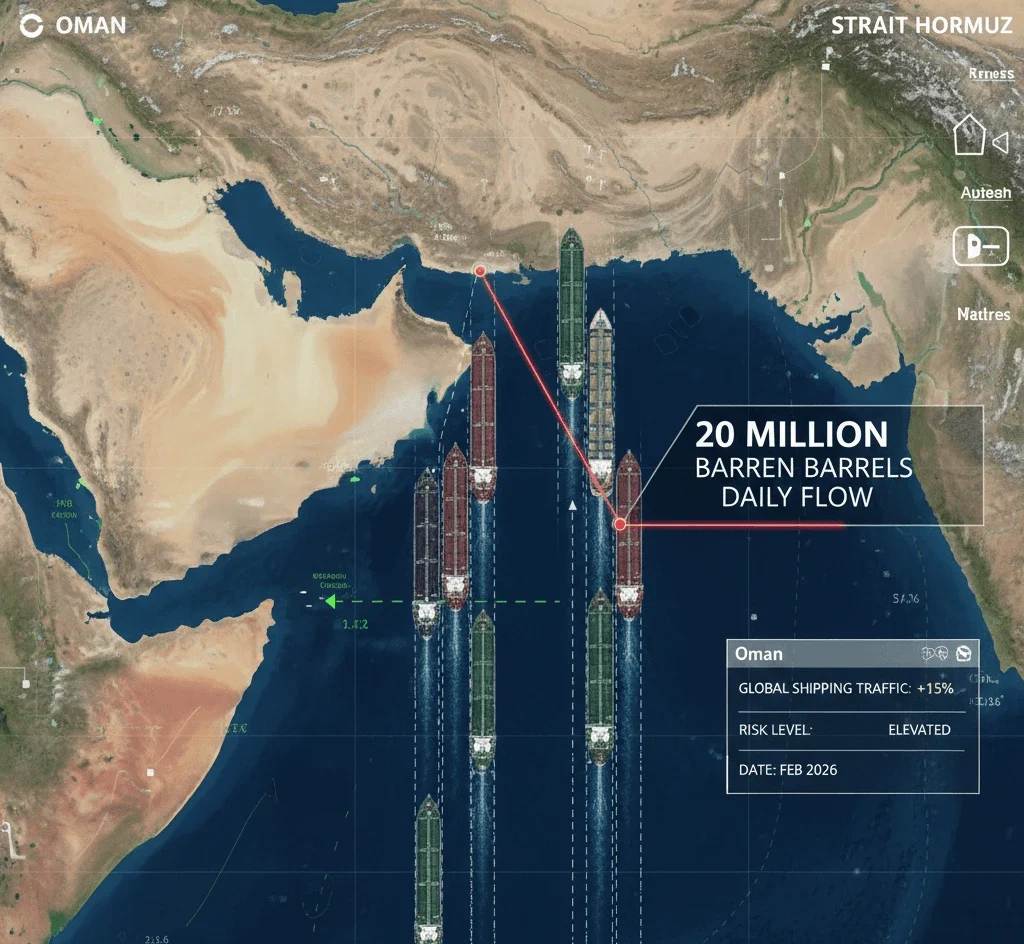
The Strait of Hormuz connects the Persian Gulf with the Gulf of Oman and the Arabian Sea. Geographically, it is a tiny needle-eye through which the lifeblood of the industrial world must pass. At its narrowest point, the shipping lanes are only two miles wide in either direction, separated by a two-mile buffer zone.
The Daily Throughput
Every 24 hours, approximately 20.5 million barrels of oil (bpd) pass through this passage. To put that into perspective:
- 20% of Global Consumption: One out of every five barrels of oil used on Earth today passed through Hormuz.
- The Asian Lifeline: Over 75% of this oil is destined for Asian markets—specifically China, India, Japan, and South Korea.
- The Comparison: The entire daily production of the United States, currently the world’s top producer at roughly 13.5 million bpd, does not even match the volume flowing through this single strait.
When you look at the math, the conclusion is inescapable: There is no “Plan B” that can immediately replace 20 million barrels if the tap is turned off.
2. The Pricing Calculus: The “Terror Premium” and Market Fear
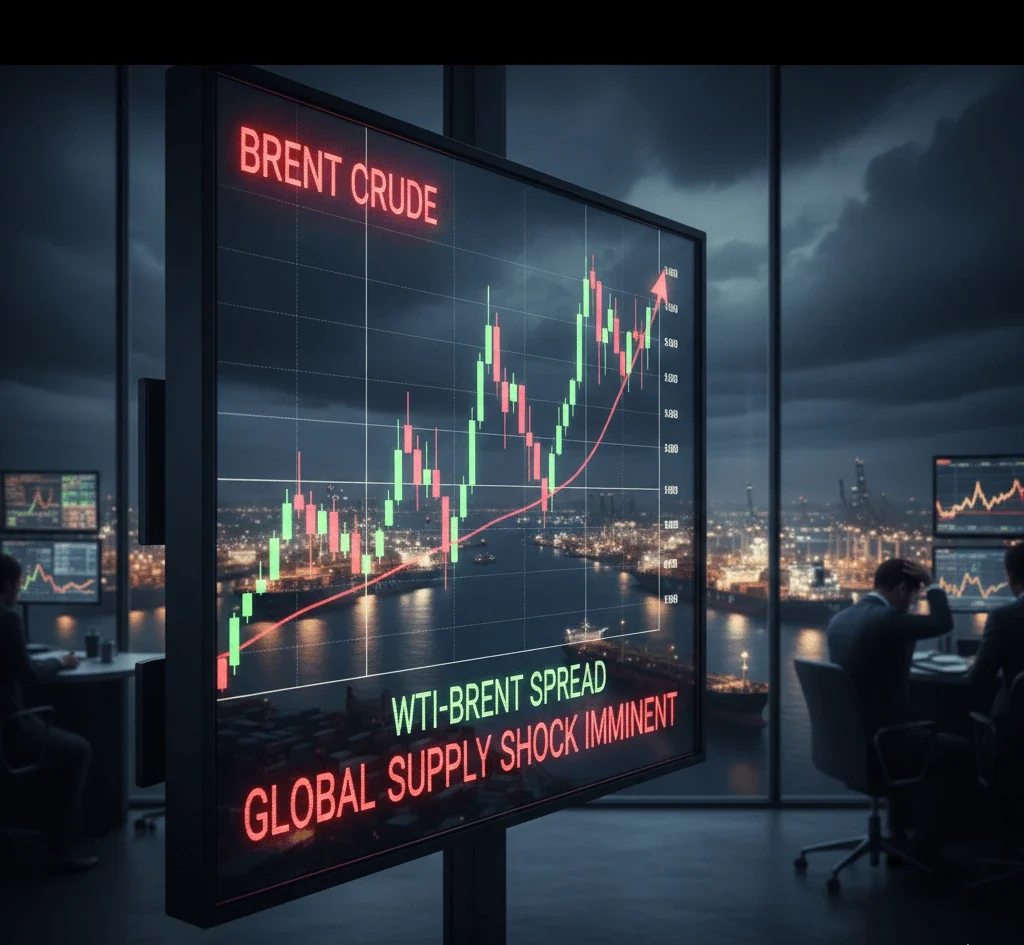
Markets do not wait for a physical blockage to react. In the “Fuel and Oil News” niche, we often talk about the “Risk Premium.” This is the additional cost per barrel that traders add simply because of the possibility of a disruption.
The $10 Multiplier
In February 2026, geopolitical friction in the region has already baked a “Fear Tax” into the price of Brent crude.
- The Math: If oil is trading at $60 based on supply and demand, a “minor” naval incident in the Strait can instantly push it to $70.
- The Global Tax: A $10 increase in the price of oil acts as a massive regressive tax on the global population. It raises the cost of manufacturing, the cost of shipping groceries, and the cost of commuting.
- The Consumer Impact: Historically, for every $1 increase in the price of a barrel of oil, the price of gasoline at the pump increases by roughly 2.4 cents. A $10 “Hormuz Spike” means a 24-cent jump at the pump within two weeks.
3. The LNG Factor: The Silent Shockwave
While oil grabs the headlines, the Strait of Hormuz is also the primary exit point for nearly 20% of the world’s Liquified Natural Gas (LNG).
The Qatar Connection
Qatar is a global leader in LNG exports, and almost every cubic meter of that gas must navigate the Strait. In 2026, as Europe and Asia have moved further away from coal and toward gas as a “transition fuel,” the reliance on Qatari LNG has never been higher.
- The Electricity Shock: A disruption in the Strait doesn’t just stop cars; it stops power plants. In countries like Japan and parts of Western Europe, a two-week blockage could lead to rolling blackouts and a complete halt of industrial production.
- Price Volatility: Unlike oil, LNG prices are often tied to long-term contracts but the “spot price” (immediate purchase) can skyrocket by 400% or more during a supply shock, as seen in the energy crises of the early 2020s.
4. Why 2026 is Different: The Era of “Fractional Resilience”
Is the world more prepared for a Hormuz shock today than it was ten years ago? The answer is a complicated “sort of.”
The Rise of the Western Bloc
As discussed in our previous analysis of the US-Venezuela partnership, the Western Hemisphere is becoming more self-sufficient.
- The US-Guyana-Venezuela Axis: This trio now provides a significant cushion for the Americas.
- The Strategic Petroleum Reserve (SPR): Most OECD nations maintain a 90-day supply of oil for emergencies.
The “Just-in-Time” Trap
The math of the SPR is deceiving. While we have “90 days of oil,” we do not have 90 days of refining capacity or the ability to teleport that oil to where it is needed most (Asia). If the Strait closes, the “math of logistics” takes over. Tankers that were supposed to arrive in Shanghai from Kuwait suddenly have to be replaced by tankers from Brazil or the US Gulf Coast—a journey that takes three times longer.
5. The Mathematical Certainty of an Economic Recession
If the math of a supply shock dictates that 20 million barrels disappear from the market, the result is a guaranteed global recession.
- The Inflation Feedback Loop: Higher energy prices drive up the cost of everything. Central banks, currently trying to keep interest rates stable in 2026, would be forced to hike rates to combat “energy-pushed” inflation, further slowing the economy.
- The Manufacturing Halt: In a world of “Just-in-Time” manufacturing, a delay in energy delivery can halt production lines for semiconductors, automobiles, and medical supplies.
Conclusion
The Strait of Hormuz is a reminder that for all our digital advancement, the physical world still dictates the terms of our prosperity. The math is simple: 20 million barrels cannot fit through a needle-eye if the eye is closed.
While the “Hemispheric Energy Dominance” of the US and the revival of Venezuelan production offer hope for a more balanced future, the Strait remains the world’s most dangerous variable. In 2026, energy security isn’t about how much oil you have in the ground; it’s about whether you can get it to the market.