Why gas prices are falling while crude stays volatile
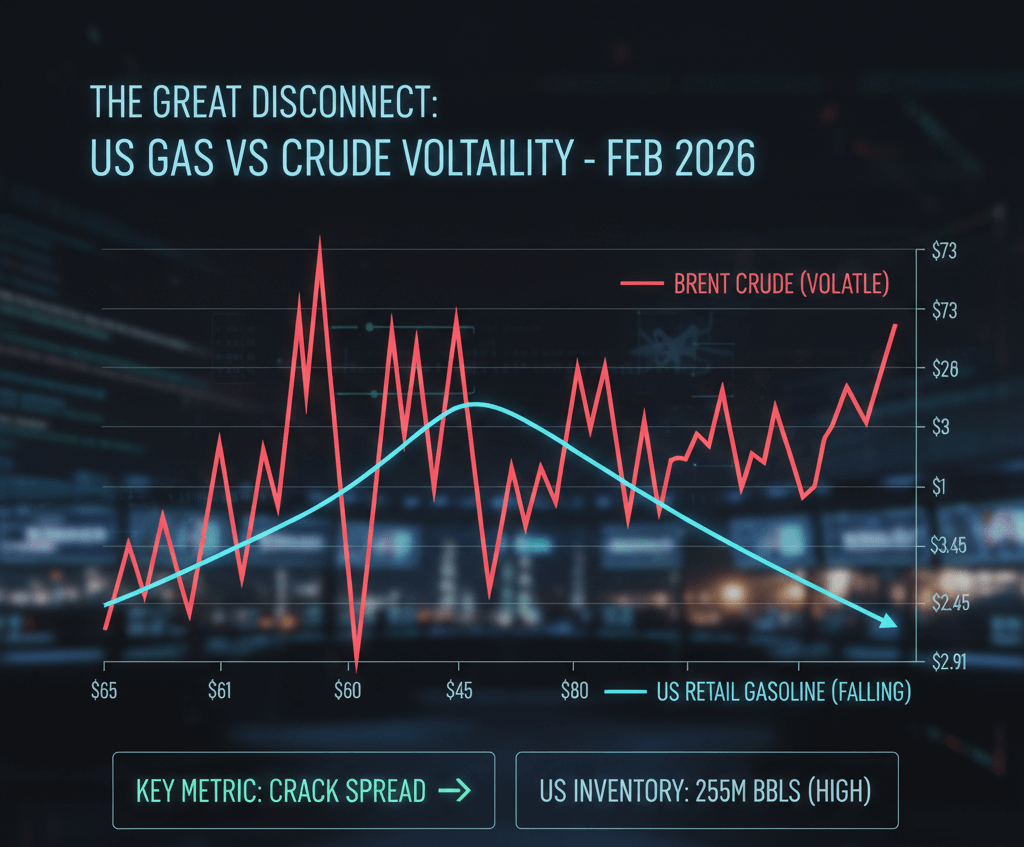
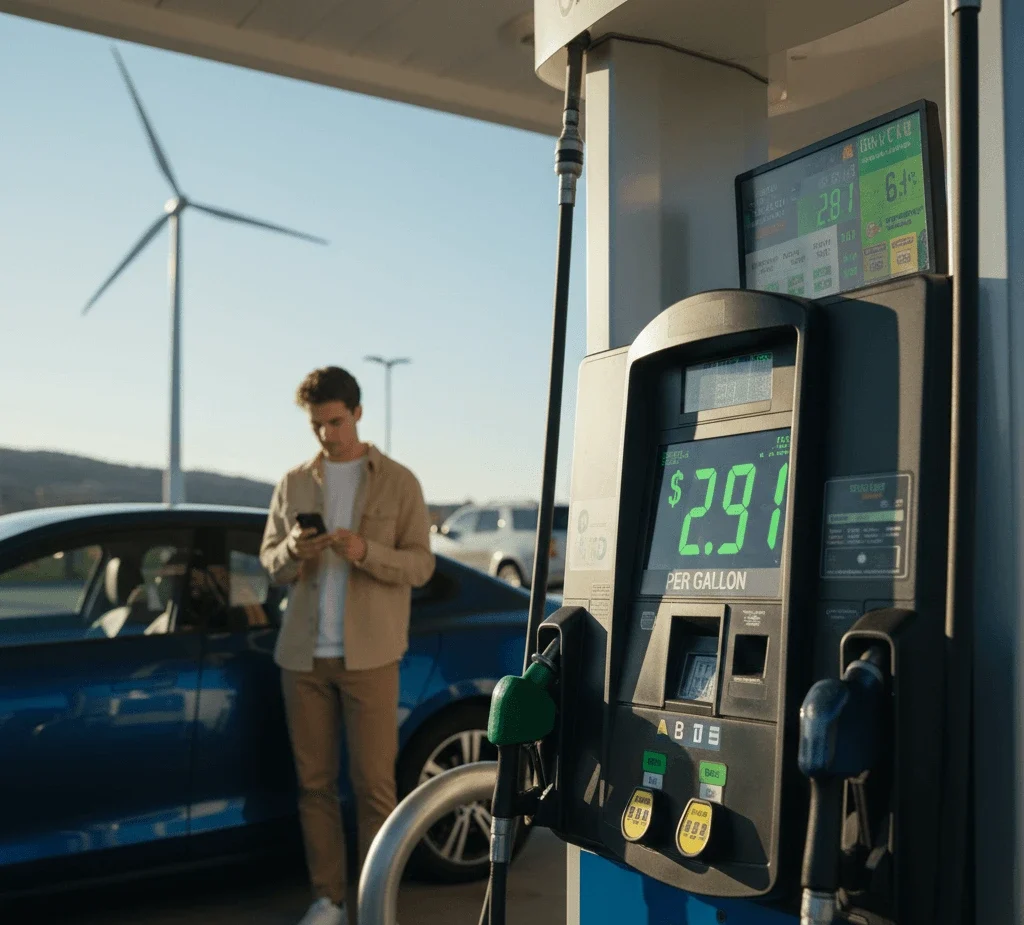
In the high-stakes world of global energy, the first quarter of 2026 has introduced a baffling paradox for the average driver. Turn on any financial news network, and the headlines are filled with “geopolitical risk,” “Strait of Hormuz naval drills,” and “Brent crude volatility.” Yet, as you pull into your local gas station, the numbers on the plastic sign are doing something unexpected: they are moving down.
As of late February 2026, the global oil market is caught in a tug-of-war between “Fear” and “Fact.” While crude oil traders are pricing in the possibility of a Middle Eastern supply shock, the physical reality of the gasoline market is one of abundance. To understand why your gas prices are falling while crude stays volatile, we have to look past the geopolitical noise and examine the cold, hard mathematics of refining, inventory, and a shifting global supply chain.
1. The “Crack Spread” Math: The Middleman’s Margin
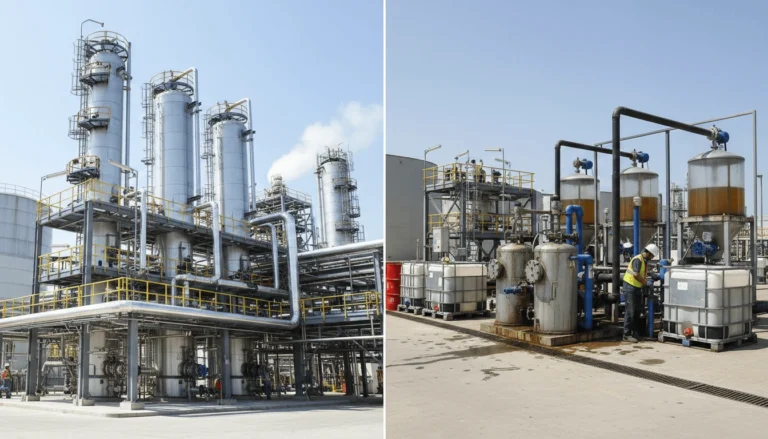
To solve the mystery of falling gas prices, you must first understand that crude oil is a raw material, not a finished product. The bridge between a barrel of oil in the Permian Basin and a gallon of gas in your tank is the refinery. The financial health of this bridge is measured by the “crack spread.”
In early 2026, the “3-2-1 crack spread”, a standard industry calculation, has tightened significantly for gasoline.
- The Surplus Squeeze: US refineries are currently running at over 90% utilization. This relentless pace has resulted in a massive build-up of finished gasoline stocks, reaching approximately 255 million barrels this month.
- Price Decoupling: When a refinery has a surplus of gasoline sitting in its storage tanks, it must lower the wholesale price to keep the product moving. Even if the cost of the raw crude oil is rising due to “volatility,” the oversupply of the finished product forces the retail price down. In 2026, we are seeing a rare event where product supply is outpacing crude demand, effectively “decoupling” the pump from the barrel.
2. Geopolitical “Fear” vs. Physical “Fact”
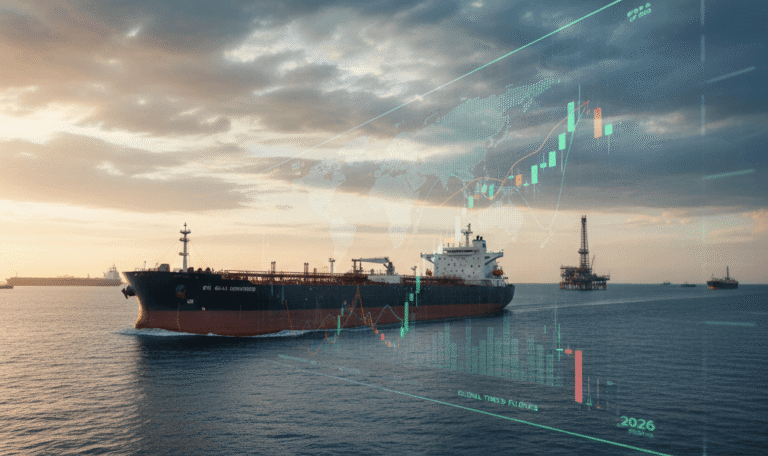
The price of crude oil (like Brent or WTI) is a forward-looking indicator. It is driven by speculators who are betting on what might happen 30, 60, or 90 days from now.
The Fear Premium
In February 2026, crude oil has been volatile because of a series of “what-if” scenarios:
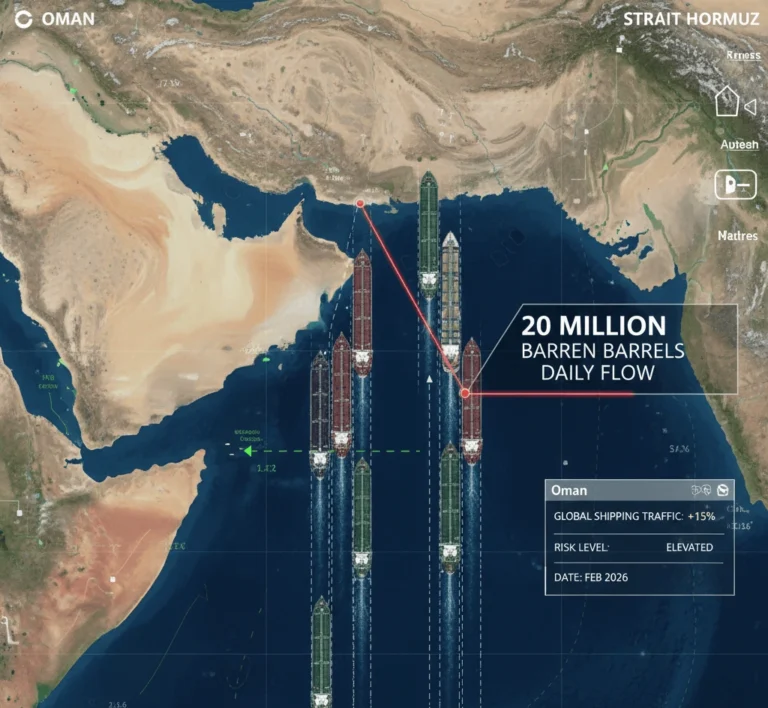
- The Hormuz Variable: Iranian naval exercises near the Strait of Hormuz have added a $5 to $7 “risk premium” to every barrel.
- The Russia-Ukraine Standoff: Renewed friction in Eastern Europe has traders worried about a sudden drop in Russian exports.
The Physical Fact
While traders are panicking, the actual flow of oil has not stopped. In fact, it has increased.
- The US Shale Juggernaut: US production has reached a record 13.6 million barrels per day (bpd).
- The OPEC+ Pause: While the cartel decided to pause production increases in early 2026, they are still pumping enough to maintain a global surplus.
- The Result: The volatility you see on the news is “paper oil” (futures contracts). The lower price you see at the pump is “physical oil” (the stuff that is actually in the pipes).
3. The “America First” Energy Insulation
The energy policies of the Trump administration in early 2026 have played a pivotal role in insulating the US consumer from global price spikes. By emphasizing a “Drill, Baby, Drill” mandate and rolling back environmental restrictions on refinery blending, the administration has fundamentally changed the US supply-demand curve.
- Domestic Protectionism: With the US now producing significantly more than it consumes, the domestic market has a “first-mover” advantage. US refiners can source cheap domestic WTI crude, which currently trades at a $5 discount to global Brent crude.
- The Strategic Advantage: This discount allows US gas stations to keep prices low even if global markets are in a frenzy. We are moving toward a “Bipolar Oil World” where North American energy prices are increasingly independent of Middle Eastern instability.
4. Seasonal Demand and the 2026 Economic Pivot
February is traditionally a low-demand month for gasoline. In early 2026, this seasonal dip was amplified by specific economic shifts:
- The Remote Work Resurgence: A secondary wave of remote-work adoption has permanently lowered “commuter demand” by an estimated 4% compared to 2024 levels.
- Winter Weather Dampener: Severe winter storms across the Midwest and Northeast in early February kept millions of drivers off the roads, allowing gasoline inventories to grow even larger.
- EV Market Share: While the “EV revolution” has slowed in some sectors, the cumulative impact of electric vehicles on the road in 2026 is finally becoming a visible factor in gasoline demand math. Every 1 million EVs on the road displaces approximately 30,000 to 45,000 barrels of gasoline demand per day.
5. Market Analysis: The Numbers Behind the Story
For the “Fuel and Oil News” professional, the 2026 disconnect is best summarized by these three key metrics:
| Indicator | February 2025 | February 2026 | Impact |
| US Daily Oil Output | 12.9M bpd | 13.6M bpd | 📉 Supply Surplus |
| National Gas Average | $3.45 | $2.91 | 📉 Consumer Relief |
| Brent-WTI Spread | $3.50 | $5.10 | 📉 Domestic Advantage |
6. The Outlook: Will the Disconnect Last?
History tells us that “decoupled” markets eventually snap back together. While you are enjoying sub-$3.00 gas in February 2026, three “Spring Traps” could close this gap:
- Refinery Turnaround: In March and April, many refineries will go offline for “seasonal maintenance” to switch from winter-blend to summer-blend gasoline. This will temporarily constrict supply.
- Summer Driving Demand: As temperatures rise, so does consumption. If crude volatility remains high when demand peaks in June, the “Fear Premium” will finally leak into the pump prices.
- The Geopolitical Breakout: If the naval drills in the Strait of Hormuz turn into an actual physical blockage, no amount of US inventory will be enough to stop a global price surge.
Conclusion
The reason your gas prices are falling while crude stays volatile is simple: We have a physical abundance of gasoline and a psychological scarcity of crude.
In 2026, the US energy landscape is more resilient than it has been in decades. While the “math of fear” continues to dominate the headlines, the “math of reality” is keeping your tank full without breaking the bank. For the savvy blogger and the everyday driver alike, the lesson of 2026 is clear: Watch the inventories, not just the tickers.