
Is the US-Venezuela Partnership the End of OPEC’s Dominance?
The global oil market is currently witnessing its most significant structural shift since the 1973 oil embargo. As of early 2026, the burgeoning energy partnership between the United States and Venezuela is no longer a matter of speculative diplomacy, it is a market reality that is sending shockwaves through the headquarters of the Organization of the Petroleum Exporting Countries (OPEC) in Vienna.
For half a century, OPEC (and its later expansion, OPEC+) has held a near-monopoly on the “swing” capacity of global crude. By tightening or loosening the taps, Riyadh and Moscow could effectively dictate the price of a gallon of gas from London to Los Angeles. However, the “Caracas Pivot” of 2026 is creating a Western Hemisphere energy bloc that threatens to render the cartel’s traditional tools of influence obsolete.
1. The Geopolitical Earthquake: Why 2026 Changed Everything
To understand if this is truly the “end” of OPEC’s dominance, we must look at the convergence of three specific factors that peaked in the first quarter of 2026:
A. The “Hemispheric Security” Mandate
Under the current US administration, the focus has shifted from global policing to regional energy insulation. By reintegrating Venezuela, the holder of the world’s largest proven oil reserves, into the Western supply chain, the US is creating a “buffer zone” against Middle Eastern instability.
B. The Death of the “Shadow Fleet”
Throughout 2024 and 2025, Venezuela survived by selling discounted crude to China via a “shadow fleet” of uninsured tankers. The 2026 US-Venezuela debt-for-oil swaps have effectively legalized these flows, bringing that oil back into the transparent, dollar-denominated market. This move has stripped China of its “discount advantage” and restored pricing power to Western benchmarks like WTI (West Texas Intermediate).
C. Infrastructure Modernization
Unlike previous attempts at reconciliation, 2026 has seen actual “boots on the ground” from major US oil services firms. We are seeing a rapid rehabilitation of the Orinoco Belt, with production targets that seemed impossible just 24 months ago.
2. The Math of Defiance: Venezuela’s Reserve Power
OPEC’s power has always been rooted in scarcity. If the world needs 100 million barrels per day (bpd) and OPEC controls 40 million, they own the margin.
Venezuela, however, is the “Black Swan” of the oil world.
- Proven Reserves: Venezuela holds approximately 303 billion barrels of oil. For context, that is more than Saudi Arabia (267 billion) and nearly triple the reserves of Iraq.
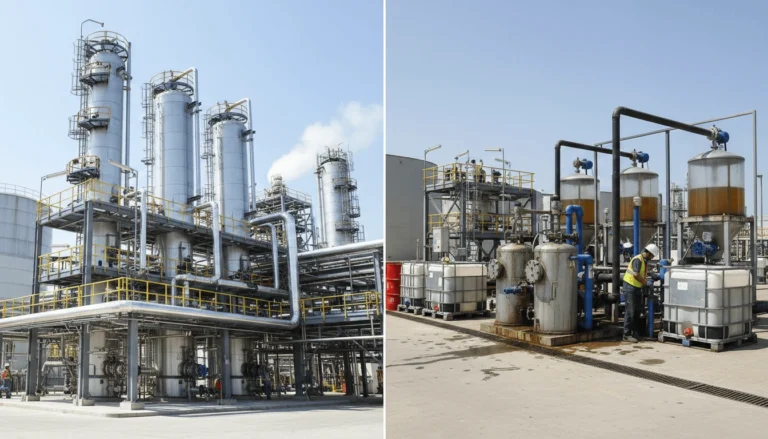
- Refining Synergy: Venezuelan crude is “heavy,” requiring complex refineries to process it into gasoline and jet fuel. The US Gulf Coast has the highest concentration of these specialized refineries in the world.
- The Cost of Transit: Shipping oil from Maracaibo to New Orleans takes roughly 4 to 5 days. Shipping from Ras Tanura (Saudi Arabia) to the US takes 35 to 40 days.
In a high-interest-rate environment where “time is money,” the US-Venezuela axis offers a logistical efficiency that OPEC simply cannot match for the American market.
3. The “Drill, Baby, Drill” Synergy
The US-Venezuela partnership does not exist in a vacuum. It is part of a broader North American energy surge.
- US Production: Domestic US production has hit a staggering 13.5 million bpd.
- The Guyana Factor: To the east of Venezuela, Guyana’s Exxon-led projects are now contributing over 600,000 bpd.
- The Canadian Pipeline Surge: The expansion of the Trans Mountain pipeline has allowed Canadian heavy crude to flow more freely to the coast.
When you combine US shale, Canadian sands, Guyanese offshore, and Venezuelan heavy crude, you get a Western Hemisphere Super-Bloc. This bloc now produces enough liquid energy to satisfy the entirety of North and South American demand with a surplus for export to Europe. This effectively isolates OPEC’s influence to the Eurasian and African markets.
4. How OPEC is Fighting Back
It would be a mistake to assume the cartel will go quietly into the night. OPEC+ still possesses the world’s most sophisticated market-manipulation infrastructure.
The “Price War” Gambit
If Venezuela’s production reaches 2 million bpd by the end of 2026, OPEC might choose to “flood the market” to crash prices. By driving crude down to $40 per barrel, they could make the expensive rehabilitation of Venezuelan wells unprofitable, effectively bankrupting the recovery before it matures.
The Russian Influence
Russia remains a key player in OPEC+. For Moscow, a US-Venezuela alliance is a strategic nightmare. Expect to see Russian “diplomatic friction” and potential cyber-interference in Venezuelan infrastructure as they attempt to protect their market share in the East.
5. The Impact on Consumers: What Happens at the Pump?
The ultimate question for the average person is: Will this make my life cheaper?
The answer is a cautious yes.
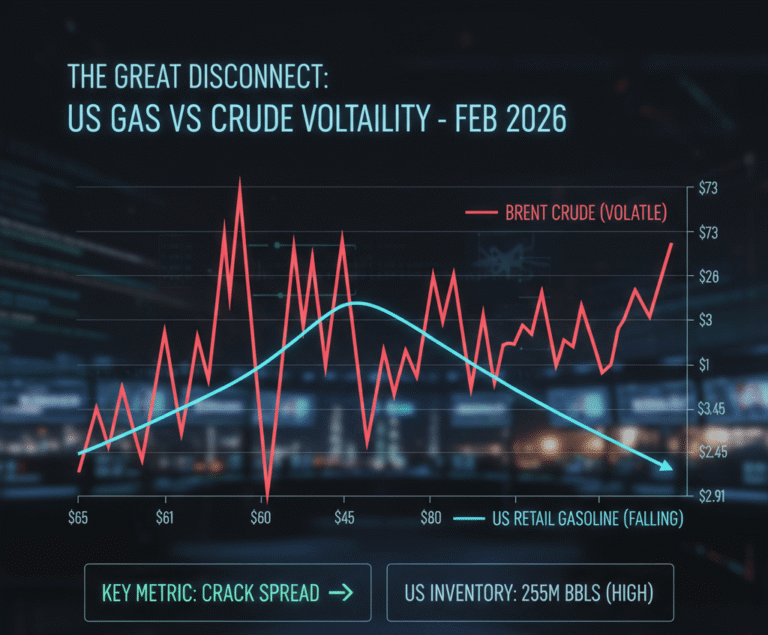
- Price Stability: With a major source of oil only 4 days away, the US is less susceptible to “geopolitical spikes” caused by conflict in the Middle East.
- Lower Jet Fuel Costs: As you may know from your interest in aviation, jet fuel is a middle distillate. Heavy Venezuelan crude is excellent for producing high-quality distillates. This partnership could provide the “breathing room” airlines need to invest in Sustainable Aviation Fuels (SAF) without passing massive costs to passengers.
- The $2.50 Target: Industry insiders believe that if the US-Venezuela partnership holds through 2027, we could see a sustained period of gasoline prices below $2.50 in many US states, even accounting for inflation.
6. Environmental Implications and the Rise of “Green” Oil
One of the biggest criticisms of the US-Venezuela deal is the environmental cost. Venezuelan heavy oil is carbon-intensive to extract and refine.
However, part of the 2026 partnership includes “Carbon Capture Integration.” US firms are bringing Methane-leak detection and Carbon Capture and Storage (CCS) technology to Venezuelan fields. The goal is to produce the world’s first “Carbon-Tracked” heavy crude, making it more palatable for ESG-conscious investors in Europe.
Conclusion: The Dawn of a Bipolar Energy World
Is this the end of OPEC’s dominance? Not quite. OPEC will remain the dominant force in the Asian market, where demand from India and Southeast Asia continues to grow.
However, it is the end of OPEC’s Global Hegemony.
We are entering a Bipolar Energy World. One pole is centered in the Middle East/Eurasia (OPEC+), and the other is centered in the Americas (The Western Hemisphere Bloc). This competition is healthy for the global economy. It prevents a single entity from holding the world’s energy supply hostage and creates a race for technological efficiency.
The US-Venezuela partnership is the final piece of the puzzle for Western energy independence. While the road ahead will be paved with political volatility and infrastructure challenges, the “balance of power” has officially shifted toward the West.