OPEC: the most powerful force in global oil pricing
Every time oil prices spike, one name comes up. OPEC.
Every time gas prices fall, analysts ask: what is OPEC doing? Every time energy markets shake, traders wait to see how OPEC responds.
The Organization of the Petroleum Exporting Countries is the most powerful force in global oil pricing. It has been for over six decades. Understanding how OPEC works and how it moves prices is the single most important thing any energy-curious reader can learn.
This guide breaks it all down. No jargon. No fluff. Just clear, honest explanations of how OPEC shapes the price of every barrel of oil on Earth and what the cartel is doing right now in 2026.
1. What Is OPEC and Why Does It Have So Much Power?
OPEC is not a single country. It is not a company. It is a political and economic alliance of oil-producing nations and its collective muscle is enormous.
The Organization Behind the Acronym
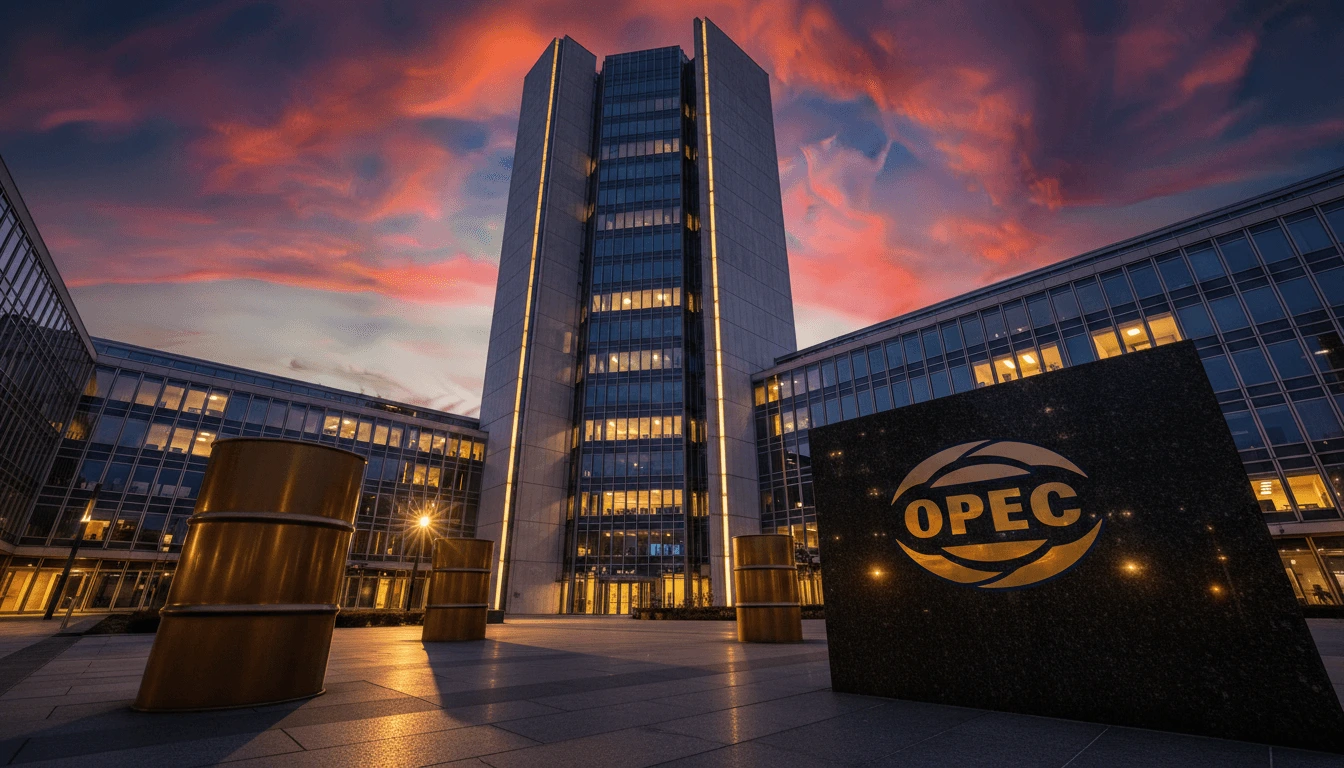
OPEC was founded in Baghdad in 1960. The founding members were Iraq, Iran, Kuwait, Saudi Arabia, and Venezuela. Today, the organization has 13 member nations drawn from the Middle East, Africa, and Latin America. Its headquarters sits in Vienna, Austria. Its decisions are made through ministerial meetings where oil ministers from each member country vote on production targets.
The core mission has never changed. OPEC exists to coordinate and unify petroleum policies among member countries. It stabilizes oil markets. It secures fair and stable prices for producers. And it ensures a reliable supply of oil to consuming nations. In practice, that means OPEC acts as a price management system for the global oil market.
The Numbers That Make OPEC Powerful
OPEC member countries directly control approximately 35 million barrels of crude oil production per day. That figure represents about 38% of total global production. On top of that, OPEC’s oil exports account for around 50% of all the oil traded internationally.
Those numbers translate into real market power. When OPEC cuts output by even one million barrels per day, global supply tightens. Prices respond within hours. When OPEC increases output, the market feels the added supply almost immediately. No single company, no single country, and no other institution commands that kind of pricing influence over a commodity this essential to the global economy.
How OPEC Became OPEC+
In 2016, OPEC expanded its coalition. It brought in major non-OPEC producers under a framework called the Declaration of Cooperation. The result is known as OPEC+. The most important addition was Russia, the world’s second-largest oil exporter. Other OPEC+ members include Kazakhstan, Azerbaijan, Bahrain, Brunei, Malaysia, Mexico, Oman, South Sudan, and Sudan.
OPEC+ is bigger, broader, and more complex than the original cartel. The eight core countries doing the heaviest lifting inside OPEC+ today are Saudi Arabia, Russia, Iraq, the UAE, Kuwait, Kazakhstan, Algeria, and Oman. These eight nations meet monthly and make the decisions that move global oil markets.
2. How OPEC Controls Oil Prices Through Production Quotas
OPEC does not set oil prices directly. It cannot walk into a market and post a number. Instead, it controls prices indirectly by managing how much oil flows into the global market at any given time.
The Production Quota System
The mechanism is production quotas. OPEC assigns each member country a monthly production ceiling, the maximum number of barrels they are permitted to pump. When the group wants prices to rise, it cuts those ceilings. Supply tightens. Prices move up. When it wants prices to fall, it raises ceilings. More oil hits the market. Prices soften.
This system works because of the basic economics of supply and demand. Oil is a globally traded commodity. A reduction in global supply, even by a few percent, creates scarcity. Buyers compete harder for available barrels. The price rises. OPEC exploits that relationship deliberately and systematically.
The Role of Saudi Arabia as Swing Producer
Saudi Arabia is OPEC’s dominant force. It is the world’s largest oil exporter and OPEC’s de facto leader. Saudi Arabia serves as what economists call the “swing producer”, meaning it adjusts its own output up or down to balance the market when other members fail to comply with their targets.
Saudi Arabia’s willingness to absorb production cuts unilaterally gives OPEC its real power. In periods of price weakness, Riyadh has repeatedly cut its own production deeper than required, sacrificing short-term revenue to support the global price. That strategic discipline is the backbone of OPEC’s pricing influence.
Compliance: The System’s Biggest Weakness
The quota system has one structural flaw. Member countries do not always follow their agreed targets. Some produce above their quotas to maximize short-term revenue. Iraq, Nigeria, and Kazakhstan have been chronic overproducers. That non-compliance injects unpredictability into the market.
OPEC+ addresses this through compensation agreements. Countries that overproduce in one period are expected to cut deeper in future periods to compensate. The eight core OPEC+ countries have confirmed their collective commitment to full conformity with the Declaration of Cooperation, including monitoring by the Joint Ministerial Monitoring Committee. In practice, full compliance has been difficult to achieve but the framework at least creates accountability and transparency that the old OPEC never had.
3. OPEC’s 2026 Strategy: Walking a Tightrope
In 2026, OPEC+ is navigating one of the most complex environments in years. Oversupply threatens from one side. A Middle East war threatens from the other. The cartel is making moves that will define oil prices for the next 12 months.
The Q1 2026 Production Pause
OPEC+ spent the first quarter of 2026 holding production steady. The eight key producers reaffirmed their decision to pause production increments in February and March 2026 due to seasonal demand patterns. They cited healthy market fundamentals and low global inventories as justification for maintaining stability rather than adding barrels.
That caution reflected a broader concern. Global oil production was growing faster than demand. The EIA forecast global oil inventory builds averaging 3.1 million barrels per day in 2026, a significant surplus. Adding more OPEC+ barrels into an already building inventory situation would have driven prices lower. The pause was OPEC+’s way of managing that risk.
The April 2026 Pivot: Responding to the Iran Crisis
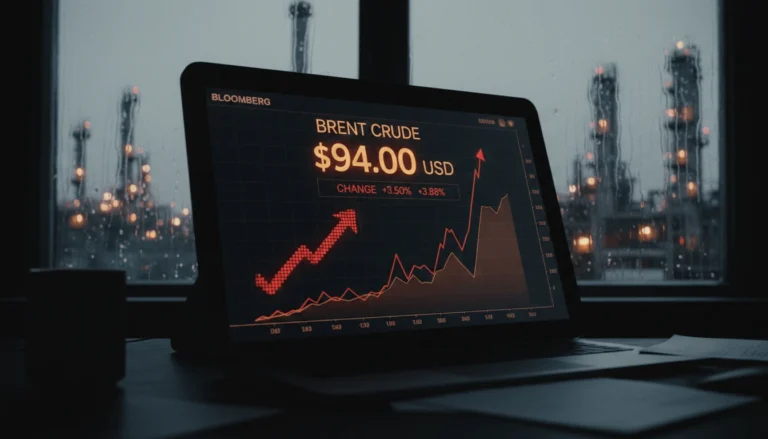
Then everything changed on March 1, 2026. The U.S.-Israeli strikes on Iran and the effective shutdown of Strait of Hormuz traffic created a sudden, severe supply shock. OPEC+ responded immediately. The group agreed to resume oil production increases at a slightly accelerated pace, adding 206,000 barrels per day in April. Saudi Arabia and Russia led the decision.
The move was strategically calibrated. OPEC+ stopped short of a more forceful increase, underscoring the tightrope it is walking between responding to near-term geopolitical risk and avoiding oversupply later in the year. Too small an increase and OPEC+ would look passive as prices surged. Too large an increase and the group would risk flooding a market that could normalize quickly once the conflict calmed.
Between OPEC & EIA: A Battle of Forecasts
OPEC and the EIA are telling very different stories about 2026, and that disagreement matters enormously. OPEC maintains a forecast of solid global oil demand growth of 1.4 million barrels per day in 2026, leading to what it calls an expected balanced market. The IEA and EIA are more pessimistic, they forecast supply significantly outpacing demand, leading to large inventory builds and downward price pressure.
This forecast gap is not just academic. It shapes every production decision OPEC makes. If OPEC is right and demand is strong, keeping supply tight makes sense. If the EIA is right and inventories are building, OPEC’s production cuts are fighting against structural oversupply, a battle the cartel cannot win indefinitely.
4. What Happens When OPEC’s Strategy Fails?
OPEC does not always win. History shows what happens when the cartel’s internal discipline collapses or when market forces overwhelm its strategy.
The 2014 Price Crash
In 2014, OPEC made a fateful decision. Instead of cutting production to defend prices as U.S. shale output surged, Saudi Arabia chose to maintain output and flood the market. A deliberate strategy to drive down prices and squeeze high-cost American shale producers out of the market. Brent crude collapsed from over $100 per barrel in June 2014 to below $30 by January 2016.
The strategy failed. American shale proved more resilient than expected. It adapted, cut costs, and survived. OPEC lost billions in revenue. The episode taught the cartel a painful lesson about the limits of market-share warfare in a world with diversified producers.
The 2020 Covid Collapse
In March 2020, OPEC+ imploded temporarily. Russia and Saudi Arabia engaged in a brief but brutal price war just as COVID-19 was destroying global demand. Oil prices crashed to historic lows, WTI futures briefly went negative for the first time in history. The economic shock was severe enough to force an emergency reconciliation. OPEC+ agreed to the largest production cut in history, nearly 10 million barrels per day, to stabilize the market.
The 2027 Risk: J.P. Morgan’s Warning
Today, a similar fragility looms. J.P. Morgan warned that if oil prices are suppressed below $65 for an extended period, cohesion within OPEC+ will face a major test. If the UAE or Saudi Arabia chooses to increase production to protect revenue in a bid for market share, the market could see a repeat of the 2014 or 2020 price crashes, with prices potentially dropping as low as $30 by 2027 in an extreme oversupply scenario.
That risk is real. Saudi Arabia and the UAE already had a public disagreement in early 2026 over their opposing roles in Yemen. Internal OPEC+ tensions are never far from the surface. When oil revenues fall below what members need to fund their national budgets, the temptation to produce more, and free-ride on other members’ restraint, grows sharply.
5. How OPEC’s Decisions Affect You Directly
OPEC meetings happen in boardrooms and on video calls between oil ministers. The effects land at your gas station, your heating bill, and eventually your grocery receipt.
Gas Prices and the OPEC Connection
The link between OPEC production decisions and retail fuel prices is direct but delayed. When OPEC cuts production, crude oil prices rise within days. Refineries pay more for raw crude. Refined products, gasoline, diesel, jet fuel, cost more to produce. Prices at the pump follow, usually within two to four weeks. The lag exists because refiners carry inventory and because retail pricing adjusts more slowly than wholesale markets.
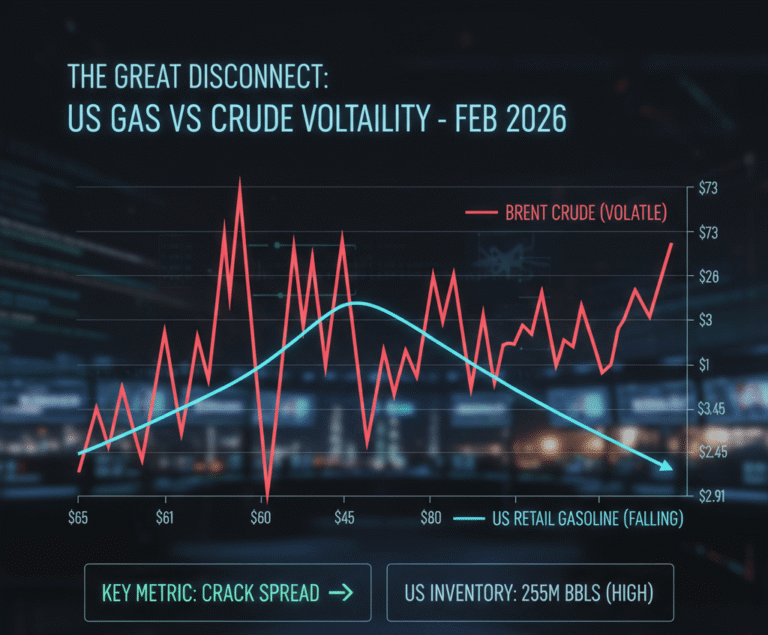
U.S. gasoline prices had been forecast to fall below $3.00 per gallon on average in 2026, driven by low crude prices. The Iran crisis and OPEC+’s April production hike changed that calculus overnight. Prices surged above $3.10 per gallon nationally within 48 hours of the strikes. Every cent of crude oil price increase translates to roughly 2.4 cents per gallon at the pump. A $10-per-barrel crude spike means roughly 24 cents more per gallon for American drivers.
The Inflation Multiplier Effect
Oil is not just fuel. It is a raw material embedded in almost every physical product. Plastics, fertilizers, pharmaceuticals, synthetic fabrics, and countless industrial chemicals all derive from crude oil. When OPEC drives oil prices higher, production costs rise across the entire economy.
Higher oil prices increase transportation costs for every good delivered by truck, ship, or plane. Higher transport costs raise the price of food, consumer goods, and industrial inputs. Central banks watch oil prices closely because a sustained surge in crude can reignite broader inflation, forcing interest rate decisions that affect mortgages, business loans, and consumer borrowing across the entire economy.
Long-Term Energy Planning
For businesses, OPEC’s decisions shape multi-year investment strategies. Airlines lock in fuel costs through long-term hedging contracts based on their expectations of where crude will trade. Shipping companies make fleet decisions based on fuel price forecasts. Manufacturers locate production facilities based partly on regional energy costs. Governments design energy subsidies and tax policy around projected oil price ranges.
When OPEC shifts strategy, from production restraint to market-share warfare, or from stability to crisis response, it resets all of those assumptions simultaneously. That is why OPEC meetings draw more live media coverage than the earnings reports of most Fortune 500 companies. The decisions made in those virtual conference calls ripple through every corner of the global economy within weeks.