
Why Renewable Diesel Is Winning the Race Against Traditional Biodiesel
The global energy transition is accelerating. Governments, refiners, fleet operators, and investors are searching for low-carbon fuels that reduce emissions without compromising performance. In this evolving landscape, renewable diesel is rapidly outperforming traditional biodiesel.
While both fuels originate from renewable feedstocks, renewable diesel has emerged as the preferred solution for heavy transport, aviation blending pathways, and large-scale decarbonization strategies. This article explains why renewable diesel is winning the race, from chemical structure and performance advantages to policy alignment and long-term scalability.
Understanding the Fundamental Difference
Although renewable diesel and biodiesel both come from organic sources such as vegetable oils, waste cooking oil, and animal fats, their production processes and final molecular structures differ significantly.
Traditional biodiesel is produced through transesterification, creating fatty acid methyl esters (FAME). Renewable diesel, by contrast, is produced through hydrotreating, a refining process similar to conventional petroleum diesel production. The result is a hydrocarbon fuel that is chemically almost identical to fossil diesel.
This molecular similarity gives renewable diesel a clear technical advantage. It behaves like petroleum diesel in engines, storage tanks, and distribution systems, which makes integration far easier across existing infrastructure.
Drop-In Compatibility: A Major Competitive Edge
One of the most decisive advantages of renewable diesel is that it is a true “drop-in” fuel. It can replace petroleum diesel without blending limits, engine modifications, or infrastructure upgrades.
Biodiesel, on the other hand, is typically blended at 5% to 20% (B5 to B20). Higher blends can create operational concerns, including cold flow issues, oxidation instability, and material compatibility challenges.
Because renewable diesel meets the same fuel standards as petroleum diesel, it eliminates blending complexity. Fleet operators can switch without retrofitting engines. Pipelines can transport it without modification. Storage tanks do not require special treatment. This seamless compatibility accelerates adoption at scale.

Superior Cold Weather Performance
Cold weather performance remains one of biodiesel’s most persistent limitations. Biodiesel tends to gel at lower temperatures, which can clog fuel filters and reduce engine reliability in colder climates.
Renewable diesel performs far better in cold conditions. Its paraffinic hydrocarbon structure allows refiners to tailor cold flow properties, making it suitable for winter operations and northern markets.
This performance reliability gives renewable diesel a strategic advantage in regions where winter conditions affect fleet operations. For logistics companies, municipalities, and long-haul transport operators, consistent cold-weather performance is non-negotiable.
Lower Emissions Profile
Both fuels reduce lifecycle greenhouse gas emissions compared to fossil diesel. However, renewable diesel often achieves greater overall carbon reductions depending on feedstock and production pathway.
Renewable diesel can reduce lifecycle greenhouse gas emissions by 50% to 80% compared to petroleum diesel. When produced from waste oils or animal fats, reductions can exceed those figures under certain regulatory frameworks.
In addition to carbon benefits, renewable diesel typically produces lower particulate matter, nitrogen oxides stability, and cleaner combustion characteristics compared to biodiesel blends. This makes it attractive for urban air quality initiatives and corporate ESG commitments.
Infrastructure and Supply Chain Integration
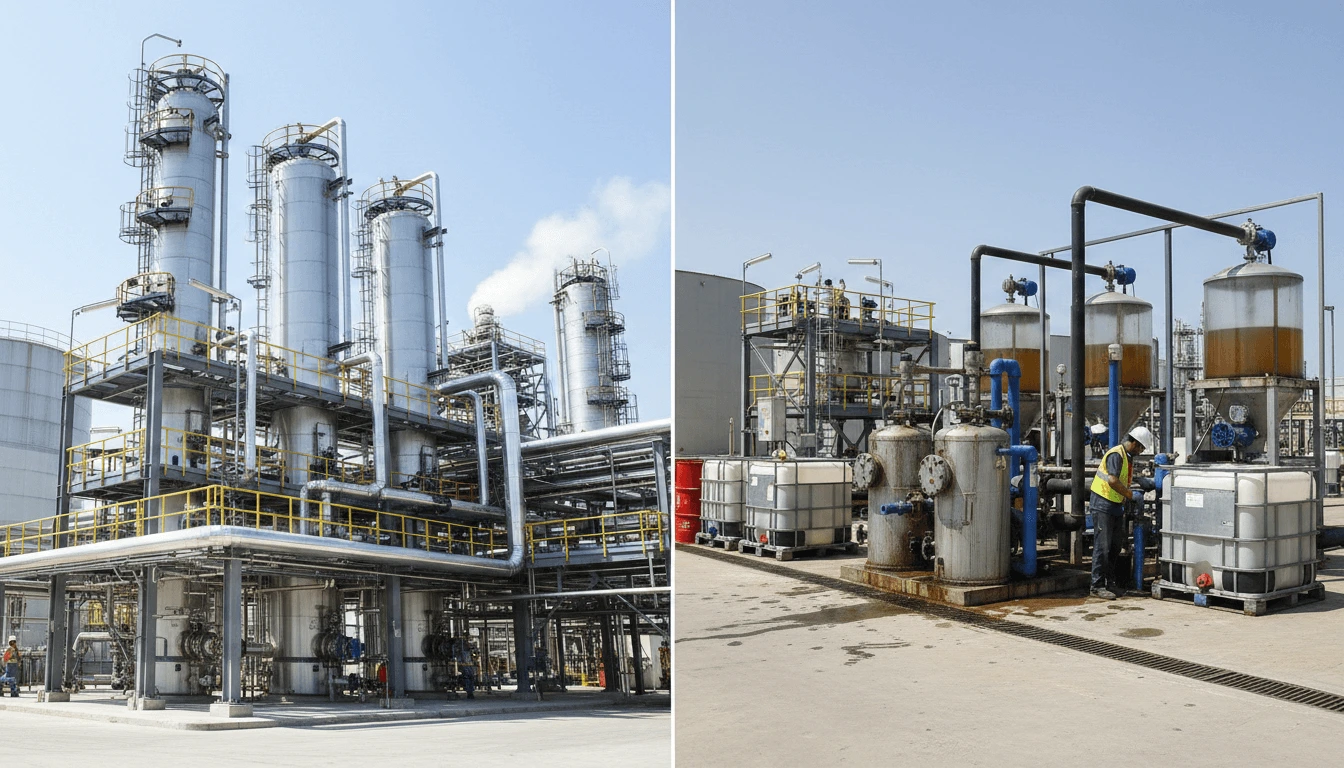
Energy markets prioritize fuels that fit within existing infrastructure. Renewable diesel aligns closely with refinery operations, allowing conventional refineries to convert or co-process renewable feedstocks.
Because the production process resembles petroleum refining, major oil and gas companies have invested heavily in renewable diesel capacity. This investment trend signals institutional confidence in the fuel’s long-term viability.
Biodiesel production facilities are often smaller and decentralized. While this supports regional supply, it limits large-scale global expansion compared to refinery-integrated renewable diesel projects.
As refiners retrofit hydroprocessing units, renewable diesel production capacity continues to expand rapidly, particularly in North America and parts of Europe.
Regulatory Alignment and Policy Incentives
Policy frameworks strongly influence fuel markets. Renewable diesel aligns well with carbon intensity scoring systems under low-carbon fuel standards.
Because renewable diesel achieves favorable carbon intensity scores, it generates higher credits in programs such as state-level low-carbon fuel standards and renewable fuel mandates. This economic incentive improves profitability for producers and reduces effective costs for end users.
Furthermore, renewable diesel qualifies under renewable volume obligations and can contribute to advanced biofuel targets. Its ability to meet stringent regulatory requirements positions it as a strategic compliance tool for energy companies navigating decarbonization mandates.
Engine Performance and Maintenance Benefits
Fleet operators report performance benefits when using renewable diesel. These include improved combustion efficiency, reduced engine deposits, and smoother operation.
Biodiesel blends can sometimes increase maintenance intervals due to oxidation stability and fuel system deposits. Renewable diesel’s chemical similarity to petroleum diesel reduces these risks.
In heavy-duty trucking, mining equipment, rail transport, and marine applications, reliability remains critical. Operators favor fuels that reduce downtime and maintenance complexity. Renewable diesel meets that requirement more effectively than traditional biodiesel.
Scalability and Investment Momentum
Capital markets increasingly favor scalable energy solutions. Renewable diesel projects often involve large integrated refineries capable of producing hundreds of millions of gallons annually.
Major energy companies have announced multi-billion-dollar investments in renewable diesel capacity. These large-scale facilities benefit from advanced feedstock sourcing, supply chain optimization, and global distribution networks.
By contrast, biodiesel production growth has been steadier but less capital-intensive. While biodiesel continues to play an important regional role, renewable diesel’s industrial scale gives it stronger long-term momentum.
Feedstock Flexibility
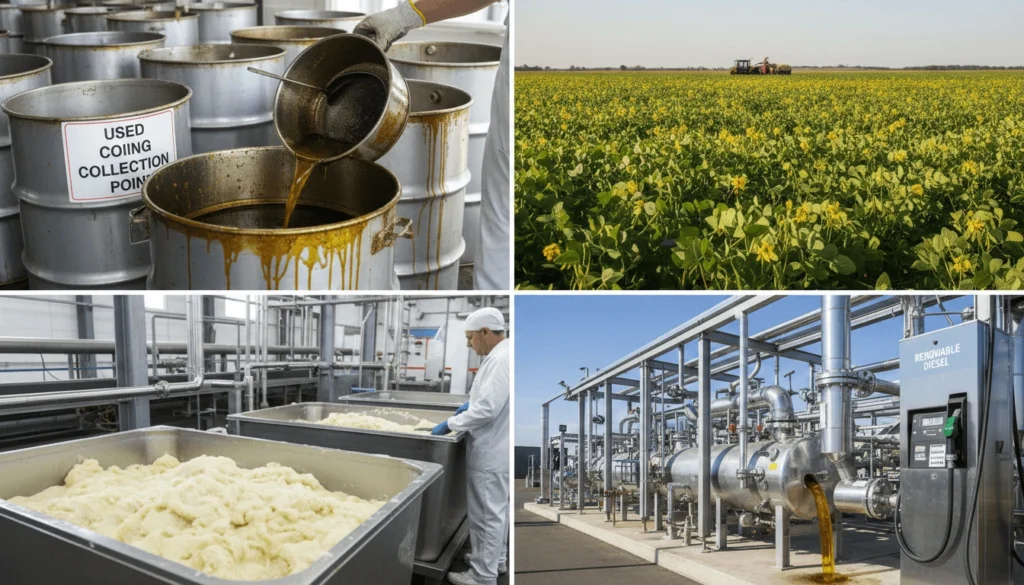
Renewable diesel production processes allow greater feedstock flexibility. Producers can use:
• Used cooking oil
• Animal fats
• Vegetable oils
• Certain agricultural residues
Hydrotreating pathways enable refiners to adapt feedstock mixes based on market availability. This flexibility improves resilience against price volatility.
Although biodiesel also uses similar feedstocks, renewable diesel’s integration within refinery systems enhances feedstock optimization strategies.
Market Demand from Hard-to-Decarbonize Sectors
Heavy transport, marine shipping, and aviation blending markets require fuels with high energy density and operational reliability.
Renewable diesel’s chemical compatibility and performance make it suitable for these sectors. It also serves as a pathway toward sustainable aviation fuel production through similar hydroprocessing technologies.
As decarbonization targets intensify, industries seek fuels that deliver measurable carbon reductions without operational disruption. Renewable diesel meets that expectation more convincingly than biodiesel.
Cost Considerations
Historically, renewable diesel production costs exceeded biodiesel. However, economies of scale, regulatory credits, and refinery integration have improved cost competitiveness.
When carbon credits and environmental incentives are included, renewable diesel often becomes economically attractive for fleet operators seeking to reduce Scope 1 emissions.
As production capacity expands, cost curves continue to improve, further strengthening renewable diesel’s competitive position.
Challenges That Remain
Despite its advantages, renewable diesel is not without challenges. Feedstock availability remains a constraint. Competition for waste oils and animal fats is intensifying as production expands.
Land-use concerns and sustainability verification also require careful oversight. Transparent certification systems will remain essential to maintain environmental credibility.
However, these challenges affect both renewable diesel and biodiesel markets. Renewable diesel’s technological and operational advantages continue to outweigh these limitations.
The Strategic Outlook
Renewable diesel is winning not because biodiesel failed, but because market expectations evolved. Modern energy systems demand fuels that integrate seamlessly, scale efficiently, and meet strict environmental standards.
Renewable diesel delivers:
• Drop-in compatibility
• Strong cold-weather performance
• Lower lifecycle emissions
• Industrial scalability
• Regulatory alignment
• Infrastructure compatibility
As governments push toward net-zero targets and corporations pursue aggressive decarbonization strategies, renewable diesel stands out as a pragmatic, high-performance solution.
Conclusion
The race between renewable diesel and traditional biodiesel reflects the broader transformation of global energy systems. Both fuels contribute to reducing fossil fuel dependence. However, renewable diesel’s molecular compatibility, operational reliability, and regulatory alignment give it a decisive competitive edge.
For fleet operators, energy companies, and policy makers, renewable diesel represents a bridge between today’s infrastructure and tomorrow’s low-carbon future.
The momentum is clear. Renewable diesel is not simply competing with biodiesel. It is redefining the renewable fuels market altogether.